coljac
Colin Jacobs in, on and about the Internet
  • Entries
  • Comment
  • Popular
Recent Posts
  • Fire the censor...
  • Lurking in Canberra...
  • Hackers, crackers and descriptive linguistics...
  • Best correction ever...
Recent Comments
  • Laz Totally agree. Colin for parliament...
  • Raili Simojoki You're right of course - are we goi...
  • Colin There's no solution to cyber-bullyi...
  • Raili Simojoki Nice one Colin. I don't see why Aus...
Popular Articles
  • Why The Greens will definitely block the filter (15)
  • Superfreakonomics and bad incentives (10)
  • Blurring the lines (9)
  • Why I joined the Greens (7)
  • Home
  • About
  • Contact
  • Media
  • Writing
  • China Blog
rss
Jul 20

Fire the censor

Posted by Colin in Internet, Opinion on July 20th, 2011 | No Comments

As somebody with a keen interest in free speech issues, I’m naturally predisposed to skepticism when it comes to government censorship. The system we have in Australia serves two purposes; it provides information to consumers (“MA15+ – extreme nudity and wisecracking animals”) and protects Australians from morally inappropriate material, such as spanking or violent video games. The first job has some merit to it – I’ve often looked at the rating of a film myself to get a bit more information on what I’m about to watch, even if I’m hoping for a higher value. The second I don’t have much time for.

The classification system was conceived at a time when the media Australians consumed was shipped around as physical objects (books, magazines, video tapes) and doled out by gatekeepers charged with enforcing censorship laws (newsagents, movie theaters, video shops). Information could be regulated like alcohol or tobacco; no naughty magazine without ID. In that case, classification-based censorship is at least practical. What do we do in a world where all content is digital? Is there anything we can do?

I was recently involved in preparing EFA’s submission to the ALRC review on the classification system. In that submission, we argue that the classification system simply can’t be made to work in an all-digital world. To me, this isn’t a controversial statement. You are, after all, reading this in a web browser from which you can, in seconds, be watching movies that have never been rated by the classification board. Indeed, many of them wouldn’t be rated by the classification board if they did see them. They would be banned if they were on a DVD.

If the existence and access to all this freely available moral pollution has had a detrimental effect on society, it hasn’t outweighed the benefits that the internet has brought. If you’re using the web, you’re already living in an uncensored world; why don’t we just acknowledge it?

The submission doesn’t appear to be up on the ALRC’s submission page yet for some reason, but if you’re interested you can grab it from this link here.

Earlier in the year I also wrote a more readable article arguing the same thing, you can read that here at the ABC.

Jun 27

Hackers, crackers and descriptive linguistics

Posted by Colin in Internet, Opinion on June 27th, 2011 | No Comments

I had a spot on 7PM Project last week talking about Cybercrime, in particular the hack of the CIA by LulzSec. I got some comments afterwards about the abuse of the word hacker by the media. As a geek, I should know better. But I’m unrepentant.

The educated nerd knows that a hacker is someone with technical skills and that hacking is synonymous with coding or another sort of focused, applied and creative engineering. Someone who makes a habit out of circumventing security is a cracker. A safe cracker, or the act of cracking a code, would have the same provenance.  Thus, the use of hacker in the context of network security would appear to be incorrect.

But it isn’t, really. One thing I took away from my study of linguistics was a respect for descriptive linguistics over the prescriptive. Language prescription, which is when an authority attempts to enforce the correct use of language, perhaps has some merit in helping standards to develop. But when the speakers of a language have diverged from that standard, attempting to force them back into conformity is always futile. Languages are living things, and evolve rapidly over time. This is something to be respected whether we think it desirable or not. (Those of us who enjoy using the neologisms of the day and take pleasure in adapting language for the current age will think it is.) So, where the dictionary definition conflicts with the meaning that is in overwhelming common usage, then it’s the dictionary that’s out of date, not the speakers.

This is clearly the case with the term ‘hacker’; to the vast majority of people I content that it conjures up the image of somebody (usually a pasty teenager) penetrating layers of network security for whatever end. The descriptive linguist in me concludes that there is no point fighting it even if we wanted to. In any case I’m certainly not going to preface an answer about the motivations of hackers with a linguistic correction.

You can watch the 7PM  spot below.

Apr 27

The copyright battle in Australia

Posted by Colin in Internet, Opinion on April 27th, 2011 | No Comments

There’s little sign that the global copyright war will let up any time soon. Wherever you go, the content industries are working hard to secure stronger “protections” for intellectual property and tougher penalties against those who infringe against these protections. Given the forces they can bring to bear – an army of lobbyists and an ocean of cash – it’s not surprising that industry has won many of these battles.

Australia is one front in this war, and several notable skirmishes have occurred in recent times. The most significant has been a case in which the movie studios, represented by AFACT (the “Australian Federation Against Copyright Theft”) sued Australia’s third-largest ISP, iiNet, for authorising copyright infringement by allowing its users to download movies using BitTorrent.

Under Australian copyright law, a third party can be held accountable for a breach of copyright if they are found to have authorised the breach by “countenancing” it and providing the means to do so. This was tested in the courts in 1975 when a university was found liable for breaches of copyright because it provided a photocopier which students could use to make copies of books.

Bringing this suit against iiNet was a clear attempt to make ISPs liable for the content traversing their networks and is a probable first step on the road to introducing a graduated response mechanism to Australia. The ultimate outcome of the case will have enormous repercussions for the future of the industry and copyright law in Australia.

Fortunately, the signs have been positive so far. AFACT initially lost the case, with a heartening judgement by the trial judge, Justice Cowdroy, who even took AFACT to task for misleadingly using the word “theft” in their name. Justice Cowdroy found that the ISP had not authorised the infringement because they did not provide or operate BitTorrent; and even if they did, could fall back on the safe harbour provisions of the Copyright Act.

Unfortunately the content industry were not willing to let things be, and despite already losing one appeal so far are set to take the case to the High Court. Should iiNet eventually be found liable, it will precipitate a seismic shift in the way ISPs operate and could usher in an era of greater monitoring and punitive measures for alleged infringers. The industry are clearly hoping for a “three strikes” system. It’s unlikely this would affect industry revenues, but Australian internet users would surely suffer from this lack of due process.

One of the more ridiculous but high profile cases involves two well-known songs with Aussie themes. Larrikin Music vs EMI is a case in which, for once, a large music publisher is on the receiving end of an overreaching copyright claim. Larrikin is a small company that owns the copyright to a well-known folk song, “The Kookaburra Song”, which was composed in 1932 for a contest being held by the Victorian Guides. They claim that their song was plagiarised in the opening flute riff used in the 80′s classic, Men At Work’s “Down Under”.

(more…)

Apr 21

Should we be worried about cyber-bullying?

Posted by Colin in Internet, Opinion on April 21st, 2011 | 3 Comments

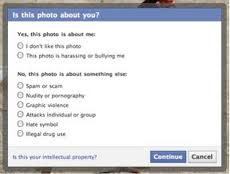
It was widely reported yesterday that Facebook have released some new security tools, including a reporting mechanism that allows kids to report an incident of bullying to a trusted adult. This initiative is parted of Facebook’s revamped Family Safety Center and came directly as a result of Facebook’s involvement with the White House Conference on Bullying Prevention.

Facebook options for reporting

It’s widely acknowledged that online bullying is a serious problem kids face today, and so reaction to the move has been largely positive, if mixed. On JJJ’s Hack program yesterday, QUT’s Marilyn Campbell suggested that the move was all well and good, but

I think that sometimes there’s a false sense of security when you have a kind of technological solution like this. Kids actually don’t tell adults, because one they don’t want the technology taken away from them, and two a lot of kids who have told an adult – the bullying actually gets worse. I would think that kids would think, “Ah, if we told an adult, the cyber-bullying actually could get worse.”

The program then followed up with a grab from me suggesting that that social networking may help kids build up resilience. I do think that, but I think some context is in order, and I’m not sure Dr Campbell’s assertion above may be borne out by the evidence.

A couple of weeks ago I attended an event around Child Protection and the Internet at the Oxford Internet Institute and got to hear about some very interesting research lead by the LSE’s Professor Sonia Livingston, who has long been working in the area and is a director of the “EU Kids Online” project, which researches the online activities of European children. Their recent report, “Risks and Safety on the Internet“, surveyed 25,000 European kids and their parents about risky online behaviour such as exposure to sexual content, sexting, cyber-bulling and meeting online contacts in the real world.

The report’s findings around cyber-bulling are fascinating. Firstly, cyber-bulling is just a subset of bullying. While 19% of kids said they’d been bullied in the last 12 months, only 6% said this happened to them online.

Secondly, cyber bullying does seem to upset kids: Of those kids who were bullied online, about half (55%) said they were left either very upset or a fairly upset by the experience. However, a large majority (62%) reported that they “got over it right away”, and only 8% said it took them weeks or months to get over the experience.

Thirdly, and perhaps most encouragingly, kids aren’t keeping it to themselves. 77% of kids reported telling someone about it – friends and parents being the most common (52% and 42% respectively). The report notes that this might explain why parents, when surveyed, were generally pretty accurate in their assessments of whether their kids had experienced online bullying. This would seem to suggest that a “tell an adult” button might actually be something kids use. I think this is counter-intuitive, but a nice change.

Perhaps the numbers in Australia will differ greatly from Europe; we’ll have some indication soon, hopefully, as Prof. Livingston told me researchers at Edith Cowan University are conducting a smaller study here using the same questions. In the meantime, the thoroughness of this research means we shouldn’t discount it.

The most important thing to remember is that cyber-bullying is just bullying. Unlike some lawmakers, kids don’t see a firm distinction between the nasty comments they receive via IM and the ones they receive in the schoolyard. After all, the perpetrators are usually the same people. So looking for a technological solution is always going to be a band-aid at best. The internet is how we communicate these days, but does little to change the social dynamics of the schoolyard. That’s not something Facebook are going to be able to change.

Rather than excluding younger kids from social networking, the evidence would suggest the risks are balanced by the benefits and that any upset kids to experienced is by and large easy for them to shrug off. Allowing them to participate – and, yes, build up resilience – may do more to help them than shielding them from dangers that are often exaggerated in the minds of adults.

(more…)

Feb 17

Clinton gets preachy on net freedom

Posted by Colin in Media, Opinion on February 17th, 2011 | 2 Comments

In January last year, U.S. Secretary of State Hillary Clinton gave a landmark speech entitled “Remarks on Internet Freedom“. The speech was noteworthy for its clear and unambiguous rejection of all forms of censorship and network control. Coming on the heels of Iran’s presidential elections and Chinese cyber-attacks, it seemed the U.S. was drawing a principled line in the sand. They put their money where there mouths were, allocating millions in funding for projects to help the citizens of the world to circumvent government controls on freedom of speech.

(Me on News 24 discussing the speech and the revolutions in the Middle East)

Yesterday Secretary Clinton revisited that theme, announcing the creation of an Office of the Coordinator for Cyber Issues and pledging a further $25 million for tools to combat censorship. However, while we heard another eloquent defence of the principle of freedom of speech in the online world, this foray is receiving a markedly cooler reception.

(more…)

Feb 14

Value for NBN Money

Posted by Colin in Opinion, Politics, Writing on February 14th, 2011 | No Comments

In the last few days I’ve found myself agreeing with Stephen Conroy again – always an unsettling experience. This time it was over the Economist Intelligence Unit’s recent ranking of Government broadband policies. They are pretty biased towards free market solutions, and so a massive government intervention like the NBN is unlikely to get top marks. (3.4/5 ain’t that bad, really.)

I wrote about this for New Matilda which you can read here: Actually, We’re Not Paying More For Less

Jan 24

Time to put classification to bed

Posted by Colin in Internet, Opinion on January 24th, 2011 | No Comments

(My piece over at the ABC today.)

Before it came along, we were served by a revolving series of moral panics, changing censorship ministers and a patchwork of different state systems. Many books and films were banned that today would hardly warrant a mention – I wonder how many high schools would not allow “The Trial of Lady Chatterley” a place in their libraries? In the sordid history of censorship in Australia, the creation of a national system under the Hawke government in 1984 at least gave us something that was uniform and understandable, and led to a slight loosening of a system that was much more puritanical than the citizens it served.

Our classification code has done its duty for these last 30 years or so. As a reward, it deserves to be given a nice cup of hot chocolate, and wheeled outside to enjoy the sunshine of its retirement.

Continue reading…

Jan 14

Jobs rant; and I’m a dirty bastion

Posted by Colin in Opinion, Writing on January 14th, 2011 | 1 Comment

Nothing sets my bullshit detector off like an industry lobbyist talking about saving jobs. The harder the industry works to keep labor costs down by cutting pay and benefits, the louder they will yell about protecting workers when policy heads in a direction they don’t like. I sound off on this in a piece over at The Punch today:

There are a lot of tricks and short cuts taken in modern discourse, with its short attention span and abundance of professional spin doctors. In particular, when discussing policy there is a certain word which is often uttered as if it was magic spells that can silence one’s detractors…

Keep reading over at their site. Now, to get to work on a piece about the use of the word “security” by governments.

I also appeared on the 7PM Project again this week, where I am now a pretty regular contributor. This time I was talking about Vodafone’s privacy fiasco which was revealed last weekend. This appearance prompted an article at Delimiter entitled “Colin Jacobs, you bastion of common sense.” It’s nice to know somebody is watching and appreciates the work – thanks!

Jan 13

Floods fuel climate imagination

Posted by Colin in Opinion on January 13th, 2011 | No Comments

The Queensland floods, reinforced by memories of other extreme weather events in recent memory, have started people chattering about climate change. We are clearly at a point where the looming challenging it presents exists as a sort of background radiation to people’s thoughts, and something like this easily brings it to mind.

It’s also true that the majority of the country supports taking some sort of action, including putting a price on carbon. Although support has reportedly softened, surveys show it is still there. For those of us particularly concerned about climate change, this is promising – isn’t it?

I wonder. If the Australian people really took the issue as seriously as an existential threat to our civilisation really warranted, we would not still be having conversations about how and why to proceed with carbon pricing, the NBN would not be the main topic of political debate, and we would not talk about the “balancing act” between protecting our coal exports and tackling climate issues. Either we would have strong bipartisan support for urgent action, or greenhouse issues would be the number one voter concern, dwarfing refugees and interest rates.

The reality is that while climate change now forms a part of the nation’s mental background, it spends too little time in the foreground where it belongs.

Could Queensland floods help change that, or will concern over climate recede along with the floodwaters? Everybody knows that climate change is not solely responsible for Queensland’s rains, but appreciates the contribution that will make events like this more frequent. Are the images shocking enough in their devastation but familiar enough in their setting (an Australian capital!) to really drive the connection between climate and personal tragedy home?

Humour me: Close your eyes and imagine the following scenario. You are at home, but the approaching disaster means its unsafe to stay. The roads are blocked or unsafe, and you’re not sure how to get away. You only have a few days’ supplies, but local supermarket is, empty, looted; the tap water is contaminated. The electricity went off yesterday. What are you going to do?

Is this frightening? If not, you are not trying hard enough to imagine yourself, and your neighbourhood, in this sort of peril.

Scenes not unlike this have unfolded in Queensland in recent days and weeks. But in the end, we know that the authorities will be there to assist, that insurance companies will make good on claims, and that the government will help pick up the pieces. When you call the emergency services, help will be on its way. We can rest assured that the nation will swing into action, and while the damage will take years to undo, recovery will begin immediately and a return to normalcy will occur, sooner or later.

But what if it didn’t? What if a string of emergencies left the authorities unable to cope? What if you called and nobody answered? Can you picture your family, rendered homeless, lives perhaps in danger, and only your wits to protect you? With help so far away, who is going to get a hold of the bottled water in the supermarket – those with the e-cash on their contactless payment cards, or somebody else? Where does food even come from, if not the supermarket?

People around the world find themselves in situations like this all the time. They know what it’s like when the rule of law is weak, and sinister gangs patrol the street outside their doors.

But we live in a country that is wealthy, stable and has a democratic history we can be very proud of. In times of adversity, we pull together. Surely, this scenario could never occur in Australia.

Only, sometimes I think to myself: What if it could? Unchecked climate change can wreak havoc on this country – changed cities, economic chaos, floods of refugees pouring in from around the world, and of course a violent and unpredictable climate. It doesn’t seem far fetched that the system could be stretched to breaking point, leaving us on our own in a time of crisis for hours, days – even longer.

With people tragically losing their lives even today, are we really prepared to take any chance of things getting dramatically worse? If, like me, you can imagine just how terrible that would be, then you understand why climate action should be at the top of the nation’s agenda.

Dec 16

Wikileaks – the backlash

Posted by Colin in Internet, Opinion on December 16th, 2010 | No Comments

The Wikileaks saga continues to captivate the public imagination. The drama around Assange and his arrest, the fascinating leaks, and the cyberpunk-style internet war that is raging in the background means this is the story that just keeps on giving. And it’s not just geeks that are soaking up the news – it’s everybody. This will have a huge impact on future debates on civil liberties online.

Though Wikileaks has done only what journalists have been doing for time immemorial, the backlash against them – and Julian Assange personally – has been massive. First came the outrage. The vociferous condemnations, encouragements to assassination, the hunt to find a legal pretext to lock him up, all came thick and fast as the latest round of leaks began. Our own Prime Minister was quick to label Wikileaks a criminal organisation, despite no laws being broken or charges filed.

Next came the legal and financial attacks. Web hosts were forced to sever ties with Wikileaks. Politicians in the U.S. put pressure on web hosts and payment processing companies such as Paypal, Mastercard and Visa to stop providing service to Wikileaks and throttle their ability to operate. Even a Swiss Bank cancelled Assange’s bank account because he used his Swiss lawyer’s address instead of his own.

The last phase will be legislative, as embarrassed Governments scramble to make laws that would ensure they can lock somebody up – if not now, then next time. Already, a bill has been introduced into the U.S. Congress that would allow the U.S. Government to prosecute Assange under the Espionage Act. Our own government may well be pondering a similar course of action; several times we have been told that they are scouring the law books for something, anything, with which to charge Assange.

Continue reading…

« Previous Entries

@coljac’s recent tweets

  • Isn't issuing a denial giving tacit permission to the media to report personal matters? #qanda 4 days ago
  • @13tales I'm not at all down on languages at all. I just don't think "more languages = success in Asia" is a coherent policy. 1 week ago
  • @swearyanthony I learned how to say 'comrade' when I was in Pyongyang. It's 'dongmu'. But i wasn't there on greens business... 1 week ago
  • @kaelalou was just an example about the undifferentiated push for Asian languages without a reason - that would make sense to students. 1 week ago
  • @13tales I speak Chinese and think its wonderful. But how many of us negotiate trade deals? How to motivate kids to learn en masse? 1 week ago

Archives

  • July 2011
  • June 2011
  • May 2011
  • April 2011
  • March 2011
  • February 2011
  • January 2011
  • December 2010
  • November 2010
  • October 2010
  • September 2010
  • August 2010
  • July 2010
  • May 2010
  • April 2010
  • March 2010
  • February 2010
  • January 2010
  • December 2009
  • November 2009
  • September 2009
  • August 2009
  • June 2009
  • April 2009
  • February 2009
  • January 2009
  • November 2008
  • February 2008
  • January 2008
  • December 2007
  • November 2007
  • October 2007
  • April 2007

Blogroll

  • Andy Social
  • EFA
  • Larvatus Prodeo
  • Nic Suzor
  • Open Internet
  • Pharyngula
  • Somebody Think of the Children
  • Stilgherrian
Powered by Wordpress | Designed by Elegant Themes